 English
 русский
 Español
 عربى
Oil Filled Power Transformer: Core Choices, Specifications and Maintenance
Content
- 1 What an Oil Filled Power Transformer Is and How the Oil Works
- 2 Core Material Economics: Amorphous vs Silicon Steel Loss
- 3 Oil Filled Power Transformer vs Dry-Type: Selection Trade-Offs
- 4 Specifications to Verify Before You Order
- 5 Maintenance and Oil Quality Monitoring That Extend Unit Life
- 6 Common Questions on Oil Filled Power Transformer Selection and Care
An oil filled power transformer that stays energized around the clock can consume 5,000 to 10,000 kWh per year in no-load losses before it delivers a single kilowatt-hour to the network. Core material choice and oil quality therefore shape the owner's electricity bill for the whole service life, not just the purchase order.
This guide is written for engineers and procurement teams evaluating oil-immersed units for distribution and industrial substations, with a focus on measurable loss data, specification checks and routine maintenance that protects the investment.
What an Oil Filled Power Transformer Is and How the Oil Works
An oil filled power transformer is an electrical transformer in which the core and windings are submerged in insulating mineral oil that provides both dielectric insulation and convective cooling. Heated oil rises from the core-and-coil assembly to the top of the tank, transfers heat through the radiators, and sinks back down, creating a natural circulation loop that keeps winding temperatures within rated limits.
The oil also shields internal insulation from air and moisture, the two main causes of accelerated paper ageing. A sealed conservator absorbs oil expansion, while a silica-gel breather removes moisture from the air entering the tank. When a minor fault develops, decomposition gases accumulate in the Buchholz relay on the pipe between tank and conservator, giving an early alarm before pressure becomes dangerous.
Every oil-immersed unit from 50 kVA up to tens of MVA relies on the same set of subsystems:
- Core-and-coil assembly with copper or aluminium windings
- Mineral insulating oil with a flash point above 135 degrees C
- Tank, radiators, conservator and silica-gel breather
- Buchholz relay and pressure relief valve for fault protection
- Off-circuit or on-load tap changer for voltage adjustment
Primary voltage classes commonly specified for oil-immersed distribution units are 6 kV, 10 kV, 20 kV and 35 kV, with 0.4 kV on the secondary side.
Core Material Economics: Amorphous vs Silicon Steel Loss
Amorphous alloy cores cut no-load losses by 60 to 80 percent compared with conventional grain-oriented silicon steel, and because the transformer stays energized for 8,760 hours every year, that difference is paid for continuously.
For a 630 kVA, 11/0.4 kV distribution transformer, a typical silicon steel design shows a no-load loss near 680 W, while an amorphous alloy design reaches about 320 W. The 360 W gap becomes 3,154 kWh per year, or roughly USD 315 per year at a 0.10 USD/kWh industrial tariff. Over a 20-year horizon, the amorphous core saves about USD 6,300 in electricity that a silicon steel core would waste.
Load losses, which appear only when power is flowing, are dominated by winding resistance and stay in the 6.0 to 7.0 kW range for the same 630 kVA unit at full load. Total cost of ownership should therefore be the sum of no-load loss, load loss multiplied by the expected utilization factor, and the purchase price.
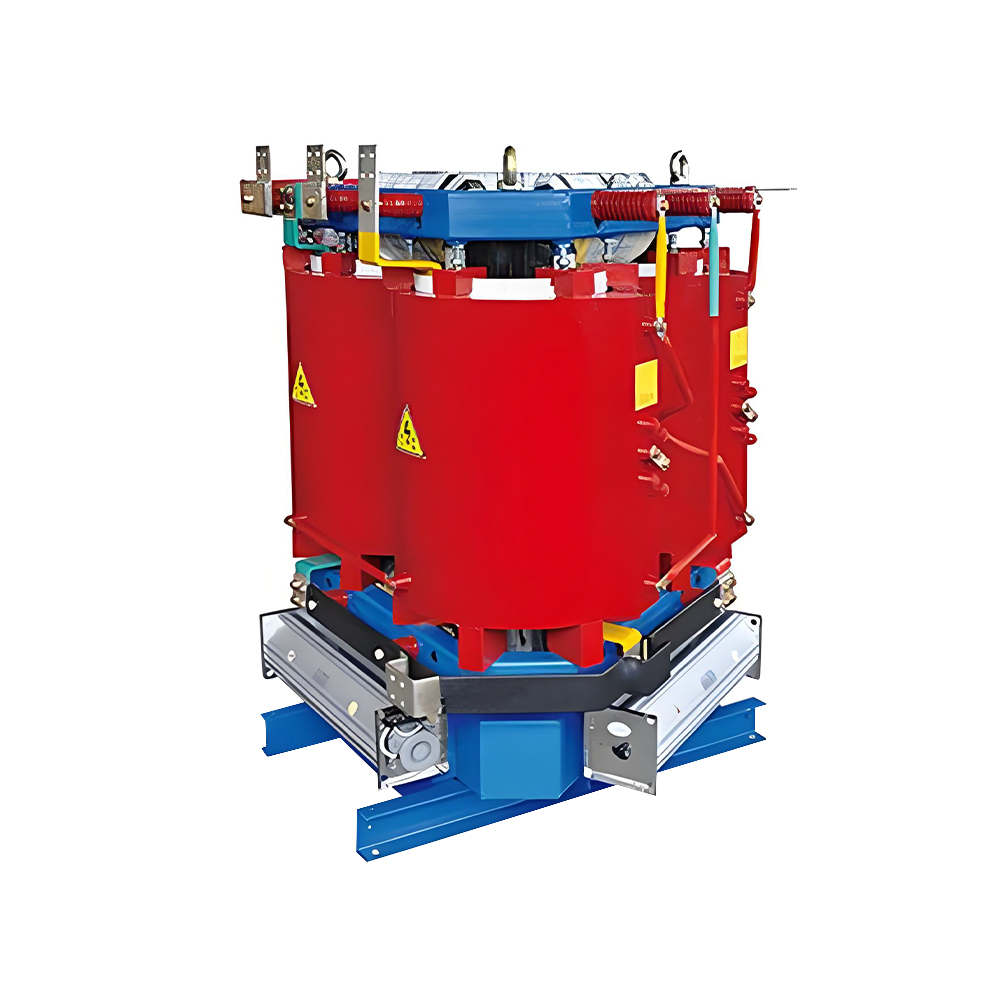
For projects where loss evaluation is critical, amorphous alloy core designs are available with the same mounting dimensions and test standards as conventional units, and they are the preferred option when the load factor is low but the transformer is continuously energized.
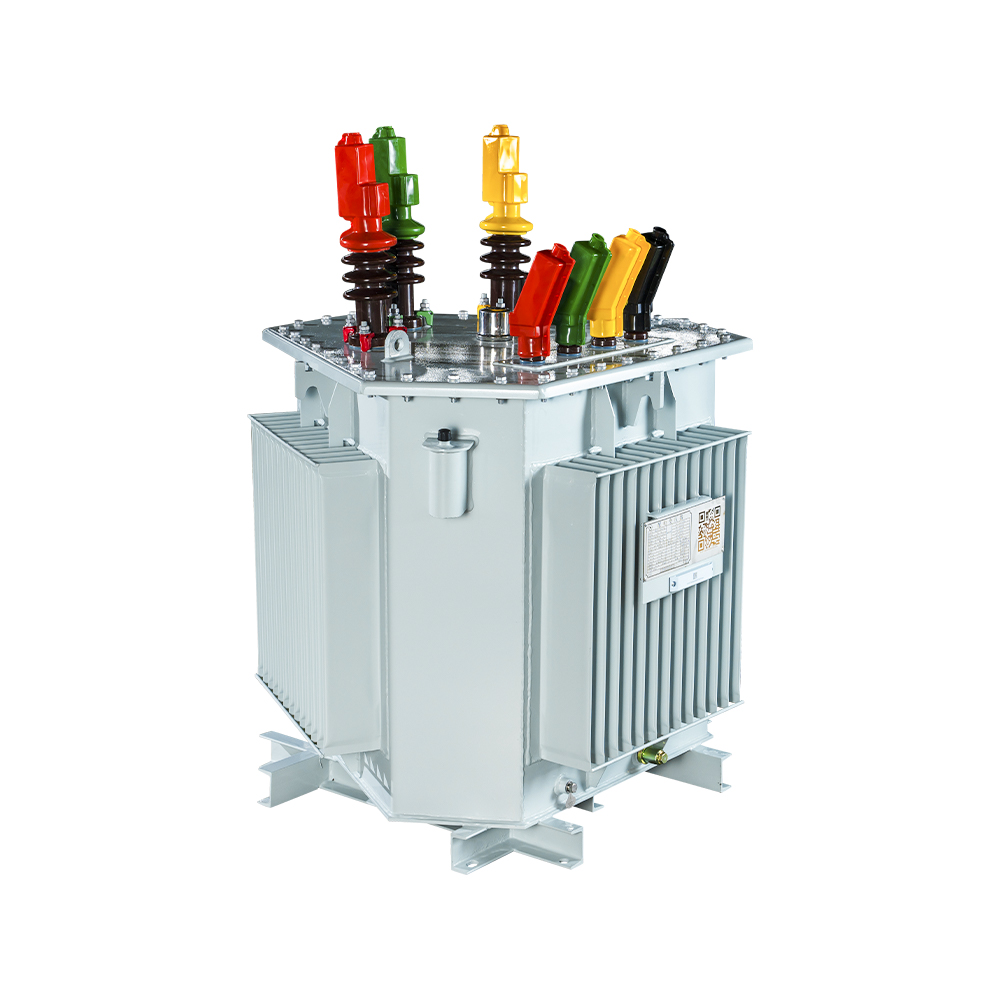 Amorphous Alloy Core Oil-immersed Transformer for Low-Loss Continuous OperationThis transformer suits projects where loss evaluation is critical and the unit runs continuously at low load. Its amorphous core cuts no-load losses and eddy currents, making it an energy-efficient choice before considering conventional silicon steel designs.View Product →
For buyers working to a tighter first-cost budget and operating at high load factors, silicon steel strip core designs remain the industry standard and offer the lowest acquisition price per kVA.
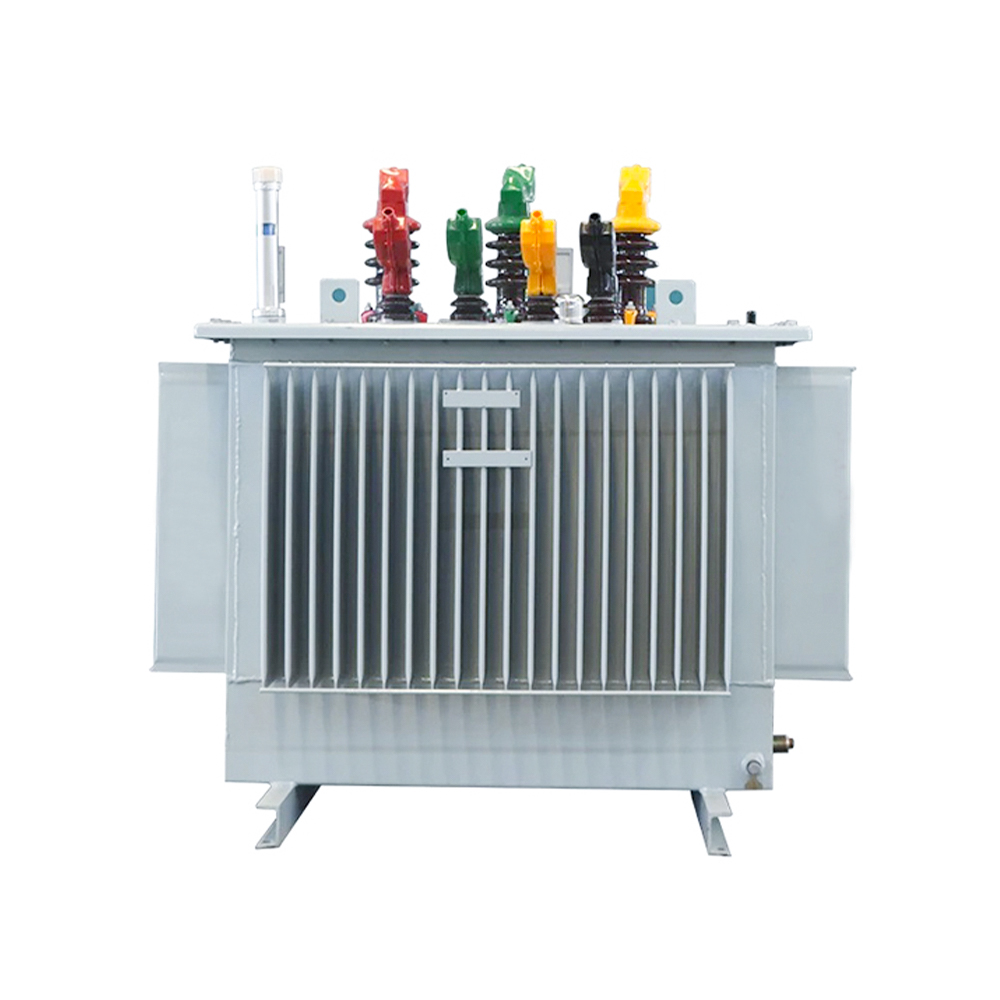 Oil-immersed Silicon Steel Strip Core Transformer for High Load Factor BudgetsWhen first-cost per kVA matters most and load factors are high, this silicon steel core transformer remains the industry standard. It offers low acquisition cost, low loss, and reliable sealed construction for distribution applications.View Product →
| Parameter | Silicon steel (CRGO) | Amorphous alloy |
| Typical no-load loss | 680 W | 320 W |
| Relative no-load loss | 100 percent | about 40 percent |
| First cost | Baseline | +15 to 25 percent |
| Typical payback at 0.10 USD/kWh | Baseline | 3 to 6 years |
Oil Filled Power Transformer vs Dry-Type: Selection Trade-Offs
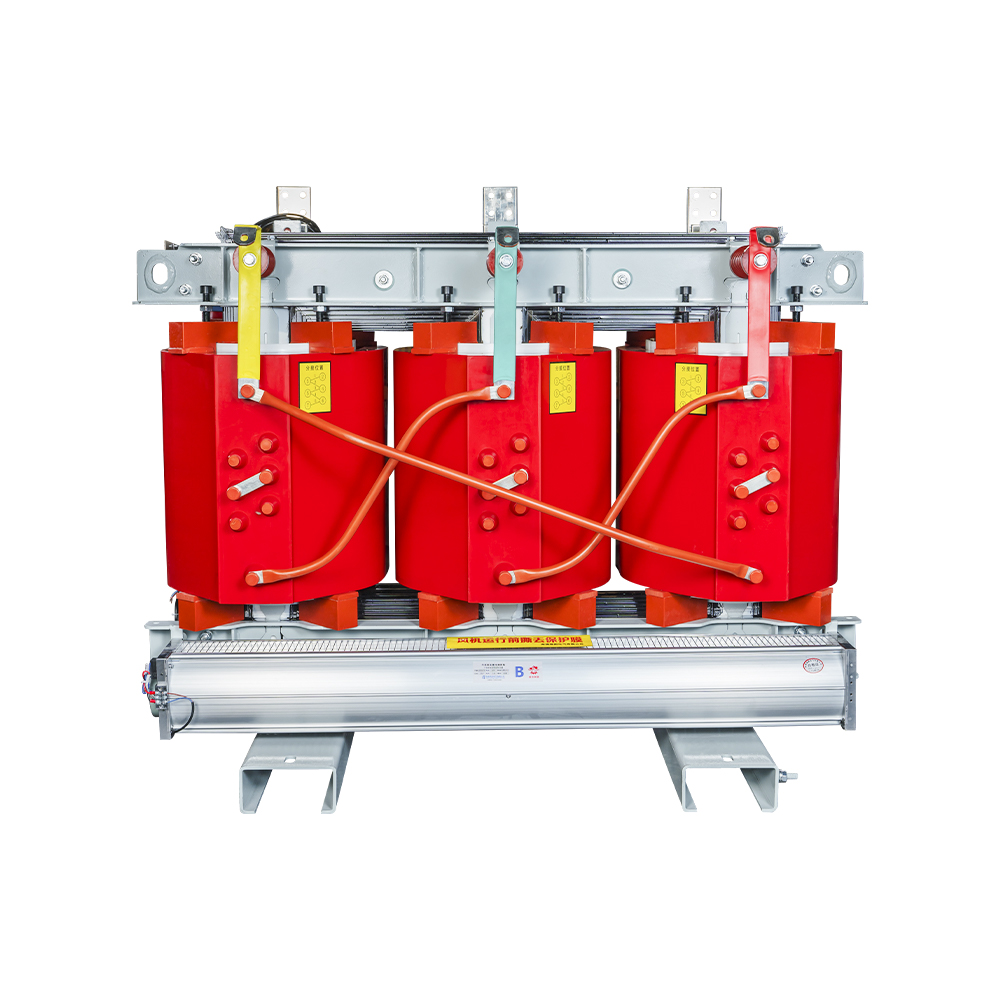
For outdoor substations and pole-mounted installations rated above 500 kVA, an oil filled power transformer is normally the lower-cost and lower-loss solution; dry-type transformers become the safer choice where fire codes restrict combustible liquids indoors.
Oil-immersed units
- Lower first cost, typically 20 to 40 percent less at the same rating
- Better cooling and higher overload capacity in a smaller footprint
- Lower no-load losses for the same core material
- Requires oil testing, spill containment and fire protection
Dry-type units
- No oil, no containment pit and no leakage risk
- Fits inside switchgear rooms and basements
- Higher acquisition cost and moderately higher losses
- Practical ratings usually stop below the biggest oil-immersed units
Specifications to Verify Before You Order
Five nameplate values decide whether a transformer matches real operating conditions: rated power, voltage ratio, impedance voltage, no-load and load losses, and the cooling class. Check each one against the actual load profile, not a generic catalogue table.
| Specification | Typical value | Why it matters |
| Rated power | 50 kVA to 40,000 kVA | Matches peak demand with acceptable overload capacity |
| Voltage ratio | 35/10 kV, 10/0.4 kV | Must fit the grid voltage on both sides |
| Impedance voltage | 4 to 7.5 percent | Controls fault current and voltage regulation |
| No-load loss | Declared per IEC 60076 | Runs 8,760 h/year regardless of load |
| Load loss | Declared per IEC 60076 | Dominates when the unit is heavily loaded |
| Cooling class | ONAN or ONAF | ONAF adds fans and about 20 to 30 percent capacity |
| Tap changer | Off-circuit or on-load | Corrects voltage variations in weak grids |
Losses are verified under IEC 60076 before delivery, with a no-load loss tolerance of +15 percent and an impedance tolerance of +/- 10 percent for values below 10 percent. Ask for the factory test report and compare the declared values with the reference standard written into the contract. Manufacturers such as Jiangsu Hengyuan Transformer Co., Ltd. publish tested loss values for each oil-immersed design in their technical documentation.
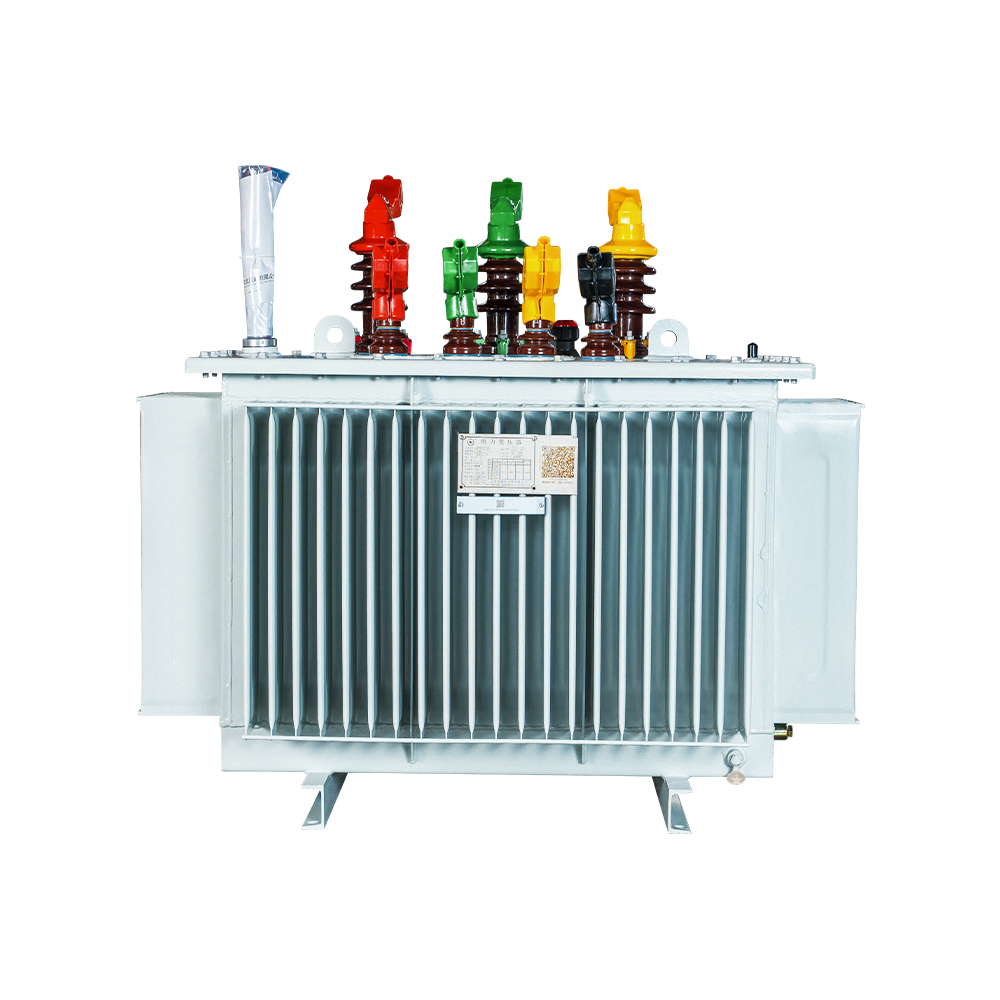
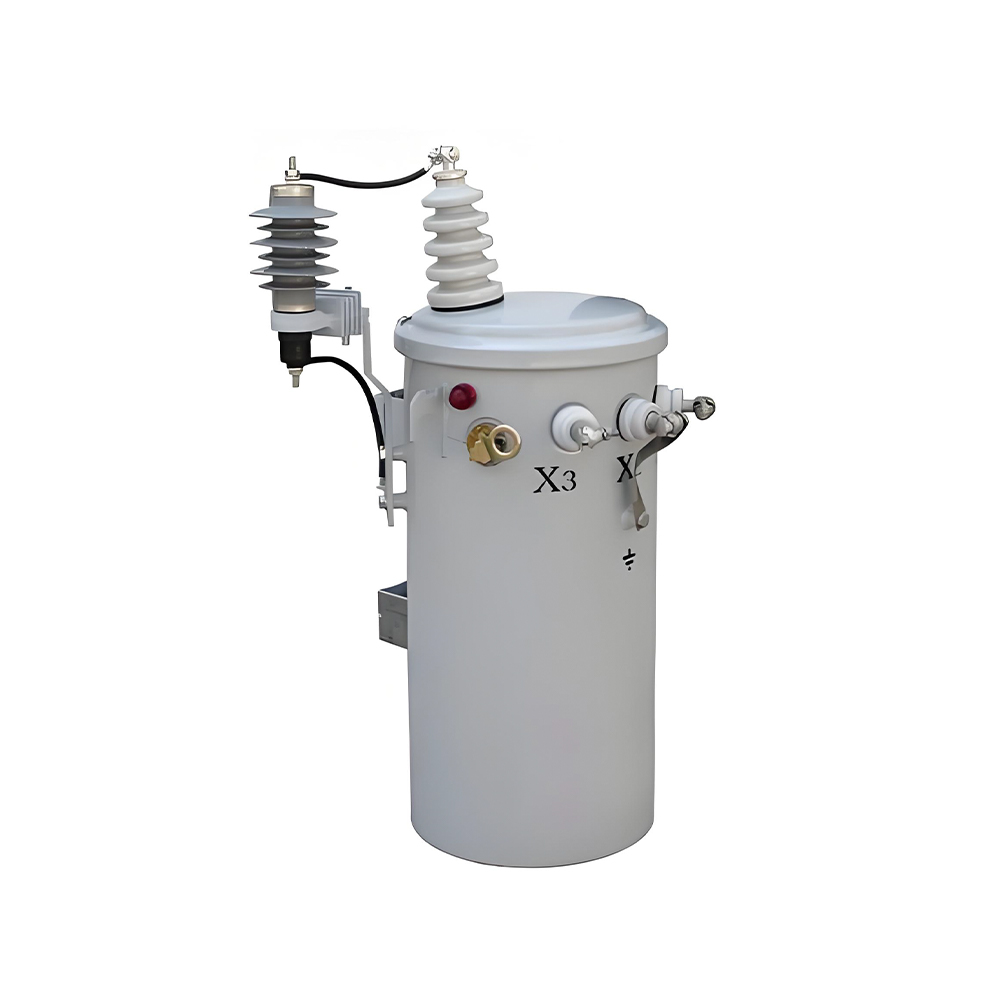
At the low-voltage end, a single-phase distribution transformer in the 0.22 to 10 kV range serves rural branches and isolated loads where a full three-phase feeder is uneconomical. Its compact design keeps installation cost low while maintaining the same oil-based insulation and cooling principles.
 Single-phase Oil-immersed Transformer for Rural and Pole-Mounted DistributionCompact and pole-mountable, this single-phase transformer serves rural branches and isolated loads in the 0.22–10 kV range, reducing line losses and infrastructure investment while providing dependable oil-based insulation for remote and agricultural power supply.View Product →
Maintenance and Oil Quality Monitoring That Extend Unit Life
Periodic dissolved gas analysis and oil breakdown voltage testing are the highest-value maintenance actions for an oil filled power transformer because they reveal developing faults while the unit stays online.
- Oil breakdown voltage test per IEC 60156: in-service oil should hold at least 30 kV, otherwise filtration or replacement is due
- Moisture content: keep below 20 ppm at normal operating temperature to slow paper ageing
- Dissolved gas analysis: monitor H2, CH4, C2H2, C2H4 and CO annually on units above 1,000 kVA
- Silica-gel breather: replace the desiccant as soon as its colour changes
- Radiator fins: clean once a year so dust does not reduce cooling capacity
Common Questions on Oil Filled Power Transformer Selection and Care
What is the typical service life of an oil filled power transformer?
With annual oil testing, DGA monitoring and timely oil regeneration, a distribution unit typically lasts 25 to 35 years. The limiting factor is usually paper insulation ageing caused by moisture and temperature, not the oil itself.
Can an oil filled power transformer be installed indoors?
Yes, with restrictions. Most codes require a fire-resistant or less-flammable liquid, a containment pit, ventilation and minimum clearances. For critical indoor rooms, a dry-type unit remains the safer alternative.
What do ONAN and ONAF cooling ratings mean?
ONAN means oil natural and air natural cooling, with the transformer self-cooled by convection. ONAF adds fans that force air across the radiators, raising the rated capacity by roughly 20 to 30 percent while the fans operate.
Why does DGA testing matter for an oil filled power transformer?
Dissolved gas analysis identifies the characteristic gas pattern of each fault type: arcing produces acetylene, overheating produces ethylene and methane, and paper degradation produces carbon oxides. A reliable DGA result can confirm a fault months before it becomes a catastrophic failure.
Recommended Products

 Contact

Contact
-

wxj.810@163.com
-

+86-523-82962116
-

No. 111, Guoqing East Road, Chengdong High-tech Industrial Park, Taixing City, Jiangsu Province, China
Copyright © 2026 by Jiangsu Hengyuan Transformer Co., Ltd. Rights Reserved.
